
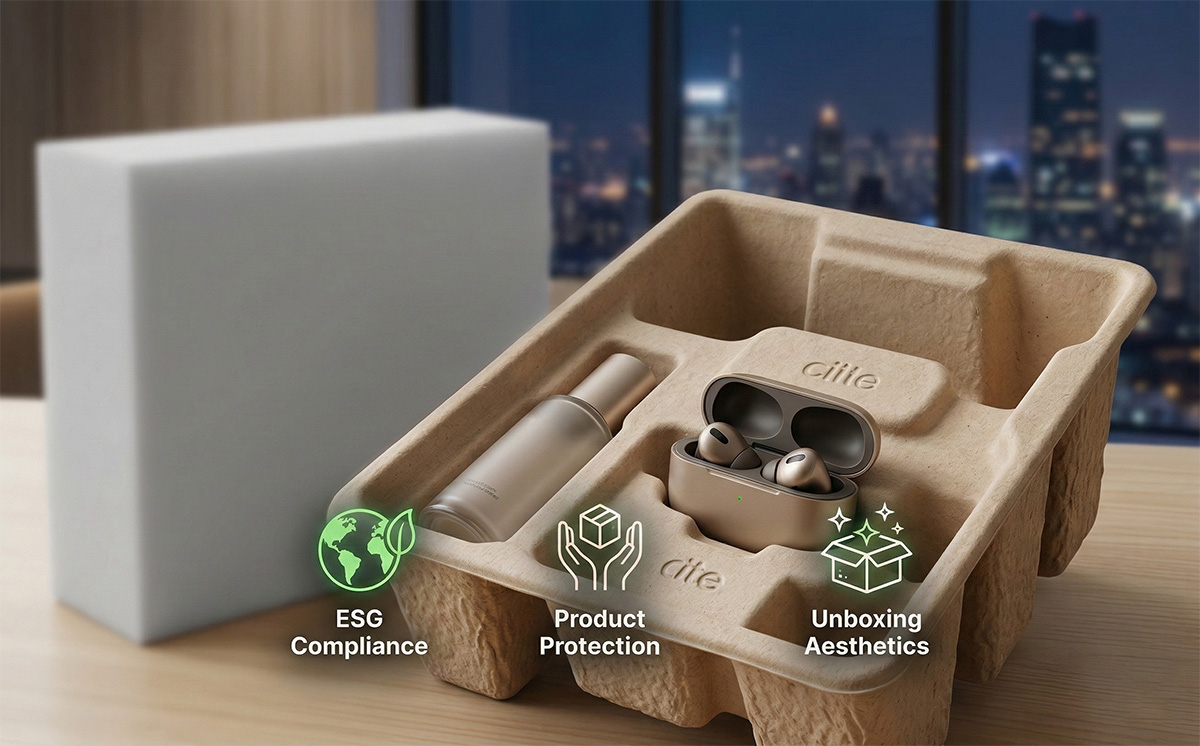
For decades, Ethylene-Vinyl Acetate (EVA) foam has been the gold standard for premium packaging inserts. It’s dense, highly protective, and holds luxury products—from skincare glass bottles to high-end electronics—with absolute precision.
However, the global retail landscape is undergoing a massive data-driven shift. Facing aggressive environmental taxes, soaring ocean freight costs, and an increasingly eco-conscious consumer base, brand owners and procurement directors can no longer ignore the hidden costs of plastic foam. The strategic pivot? High-fidelity molded pulp.
Let's dive into the industry data and see why leading brands are making the switch, and how TM&HT Packaging Inc. engineers solutions that protect both your product and your profit margins.
1. The Global Plastic Tax Reality (The ESG Mandate)
The transition away from EVA foam is no longer just a marketing PR move; it is a financial imperative driven by compliance. Governments worldwide are aggressively taxing single-use, non-recyclable plastics.
- The Data: Under the UK Plastic Packaging Tax (PPT), brands are charged £210.82 per tonne for packaging containing less than 30% recycled plastic. Similar Extended Producer Responsibility (EPR) fees are sweeping across Europe, Canada, and key US states.
- Retailer Pushback: Major retail giants (like Sephora, Target, and Credo) have issued strict vendor guidelines to phase out EVA and polyurethane foams by 2025.
How TM&HT Solves This:
We manufacture inserts using 100% recycled paperboard or rapidly renewable plant fibers (like sugarcane bagasse or bamboo). Our molded pulp is fully biodegradable, compostable, and curbside recyclable. We help your brand instantly hit 2030 ESG targets and eliminate plastic-tax liabilities entirely.
2. The Hidden Cost of Shipping "Air" (Logistics Optimization)
When procurement teams analyze packaging costs, they often just look at the unit price. But shipping EVA foam inserts from an overseas manufacturer to your assembly plant means you are paying to ship air. Foam blocks are rigid and take up a fixed, massive volume in ocean containers.
- Client Data Insight: A mid-sized consumer electronics brand previously ordered 50,000 units of EVA foam inserts, which required two 40HQ shipping containers. Upon switching to molded pulp, the entire order fit into less than one 40HQ container, resulting in an immediate 55% reduction in inbound freight costs.
How TM&HT Solves This:
Our structural engineers specifically calculate draft angles to create nestable designs. Empty pulp trays stack tightly inside one another, drastically improving pallet yield. This structural ingenuity directly combats volatile ocean freight rates and slashes your warehouse storage fees.
3. The Premium Myth: Breaking the "Egg Carton" Stereotype
The most common hesitation brand directors have is: "My product retails for $150; I cannot put it in a cheap, rough egg carton." This stems from a misunderstanding of modern manufacturing technologies.
While standard "Dry Press" pulp is indeed rough and used for industrial protection, luxury packaging utilizes an entirely different process.
How TM&HT Solves This:
We deploy Wet Press Molded Pulp (Thermoformed Pulp) technology for our premium B2B clients. Using heated metal molds, the pulp is cured directly in the cavity, yielding highly engineered results:
- Zero Wiggle Room: Crisp, precise edges that hold heavy cosmetics jars or delicate devices as securely as precision-cut foam.
- Luxurious Finish: A refined, ultra-smooth surface texture that feels closer to high-end uncoated paper than cardboard.
- Brand Cohesion: We can custom-dye the pulp during the mixing phase to match your exact brand Pantone, elevating the unboxing aesthetic.
"You are no longer choosing between sustainability and premium aesthetics. With thermoformed molded pulp, you get an engineered structural fit that elevates the unboxing experience while slashing logistical overhead."
The Verdict: A Data-Backed Investment
Transitioning from EVA foam to custom molded pulp involves an initial investment in metal tooling molds. However, the data clearly proves that the ROI is exceptionally fast. Between zero plastic taxes, halved shipping volumes, and the marketing power of a 100% sustainable package, the transition is a strategic necessity for global brands.